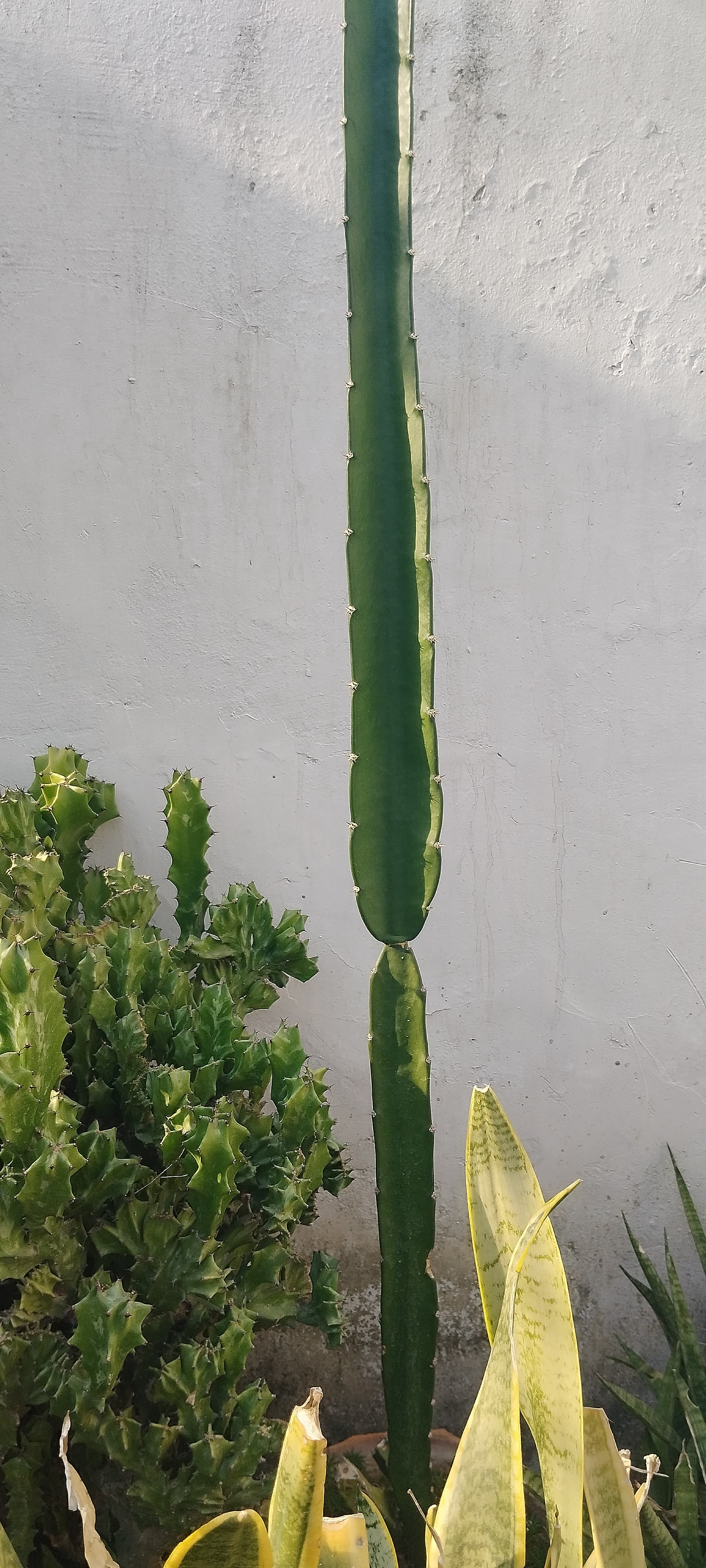
Peruvian Apple Cactus
Cereus repandus
Other Common Names: Hedge Cactus, Queen of the Night
Full sun to very bright light
Low; allow soil to dry out completely between waterings
Easy
15–30 ft tall outdoors (6–8 ft indoors)
Details
🪴 Plant Type
Perennial, columnar cactus
🌍 Native Region
South America (Peru, Brazil, Uruguay, Paraguay, Argentina)
📈 Growth Habit
Upright, single- or multi‑stemmed columns with 4–6 prominent ribs
📐 Size
Outdoors: Up to 30 ft tall, 2–3 ft wide per stem
Indoors: Typically 6–8 ft tall, 1–2 ft wide
🌸 Bloom Time
Produces large, fragrant white flowers at night in summer. Followed by edible, pink‑red “apple” fruits
Care Requirements
☀️ Light
Full sun is ideal—at least 6 hours of direct light daily. Tolerates some light shade but will grow leggy and may not flower
💧 Water
Infrequent watering: deeply water, then let soil dry out completely. Typically 2–4 weeks between waterings, depending on temperature. Overwatering → root rot; underwatering → shriveled ribs
🌍 Soil
Very well‑draining cactus or succulent potting mix. Can amend standard potting soil with coarse sand or perlite. pH: Neutral to slightly acidic (6.0–7.0)
🌡️ Temperature
Prefers 70–85°F (21–29°C). Tolerates down to 50°F (10°C) briefly; protect from frost
🧪 Fertilizer
Feed with a low‑nitrogen cactus fertilizer once a month during growing season (spring–summer). No feeding in fall and winter
Additional Information
🌱 Propagation Methods
Stem cuttings: Allow cut end to callus for a week, then plant in dry, well‑draining mix. Seeds: From ripe fruit, but slower and less common
🐛 Common Problems
Root rot: From overwatering or poor drainage. Sunscald: White or brown patches if suddenly moved into intense midday sun. Pests: Mealybugs, scale insects
🌿 Companion Plants
Other sun‑loving succulents & cacti, e.g.: Golden Barrel Cactus (Echinocactus grusonii), Agave species, Euphorbia trigona
⚠️ Special Notes
Night‑blooming flowers open only one evening—highly fragrant and showy! Fruits are edible (“apple” tastes mildly sweet). Non‑toxic but ribs and areoles have sharp spines—handle with care